After the Hunt
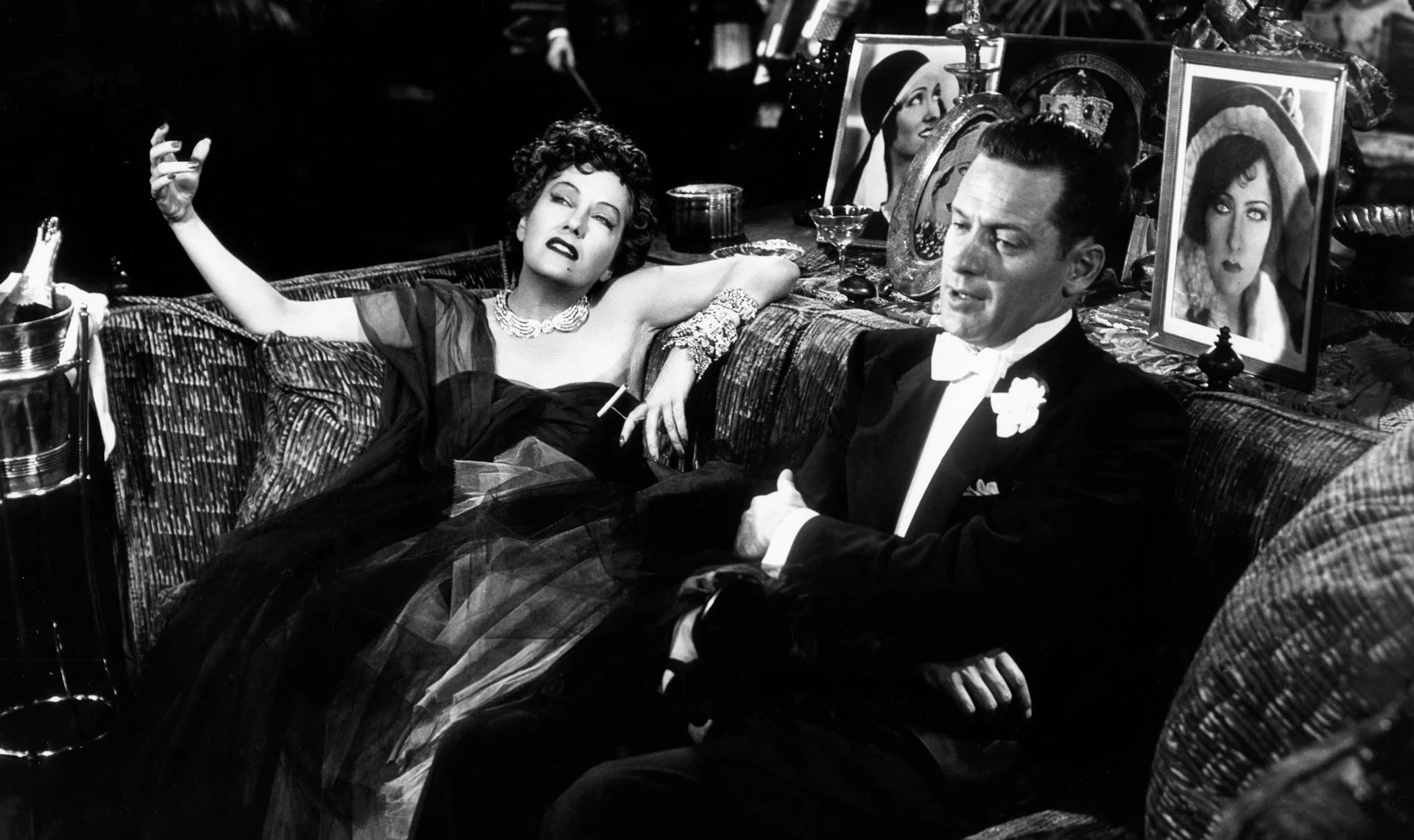
Luca Guadagnino’s most recent film, After the Hunt, was maligned and nitpicked when it was released last year. I think it’s great: a juicy drama about glamorous academics reckoning with matters of race, gender, and abuse while dancing around the billionaire class.
Of course, this ripe configuration orients itself primarily to the point of view of one white woman. Julia Roberts’ Alma is a great tragic character — emblematic of the silent, solitary valuation that is demanded of any person, but particularly any woman, who’s been granted access to the boys’ club. Guadagnino and screenwriter Nora Garrett are pretty firmly in her corner — which I don’t mind, though it is striking that Ayo Edebiri’s Maggie is consigned to ancillary behavior in the narrative.
She mostly discovers information, manipulates events, and serves as a potential wolf in sheep’s clothing. An Eve Harrington to Alma’s Margot Channing. One gets the impression that Maggie’s POV was worked in, formally, to disrupt an otherwise solely white worldview, to eschew Alma’s perspective in the eyes of the audience. But is that an enlightened choice, or merely a self-conscious one?
After the Hunt is aware that there’s a unique or willful cruelty in regarding a Black woman’s claims of sexual assault as disingenuous. Its plot hinges on that awareness. Yet I’m not sure that the conclusions it draws, or the resolutions it presents, are organic. Those feel forced, mitigated.
Which is a shame, because Roberts’ character is more than enough reason to see this movie. I felt very at home with Alma; as Nick Caraway says, “I’m inclined to reserve all judgments… and so it came about that in college I was unjustly accused of being a politician” — a revelation that has always struck a nerve with me and which, I daresay, may be applied to this pill-popping, intensely private professor of philosophy.
She is a politician, because she must survive. She is not vulnerable to anyone; no one knows of her pain.
And I get it. Why dignify people’s selfishness with your own inner truths? No sooner is your story out of your mouth than the listener is distorting it to suit their own ends. Alma keeps to herself — and, ultimately, destroys her gut — to avoid being taken advantage of.
There is no doubt that this movie is imperfect. Guadagnino and Garrett sabotage their own efforts, forgetting what people actually say and do for the sake of making their story provocative or “complicated;” this is as apparent in Maggie — who I feel is, as a character, more a construction of plot than she is a believable, breathing person — as it is in something like having Andrew Garfield’s five heaping plates of food arrive at his table at the Indian restaurant a mere minute after he ordered them.
Yet I feel that movies ought to be allowed to be imperfect. After the Hunt is a fun, messy confrontation of hot-button topics that comes off as being more paranoid, more reactive than is necessary. “No one is coming for you,” I want to say to these filmmakers. “It’s just a good idea to have boundaries, and to face yourself.”
But, of course, people do hide from themselves. That’s why we have tragedy. And that’s why we have this movie.
My Fair Lady
Aside from the original cast recording, I’ve been unimpressed with My Fair Lady in each of its incarnations.
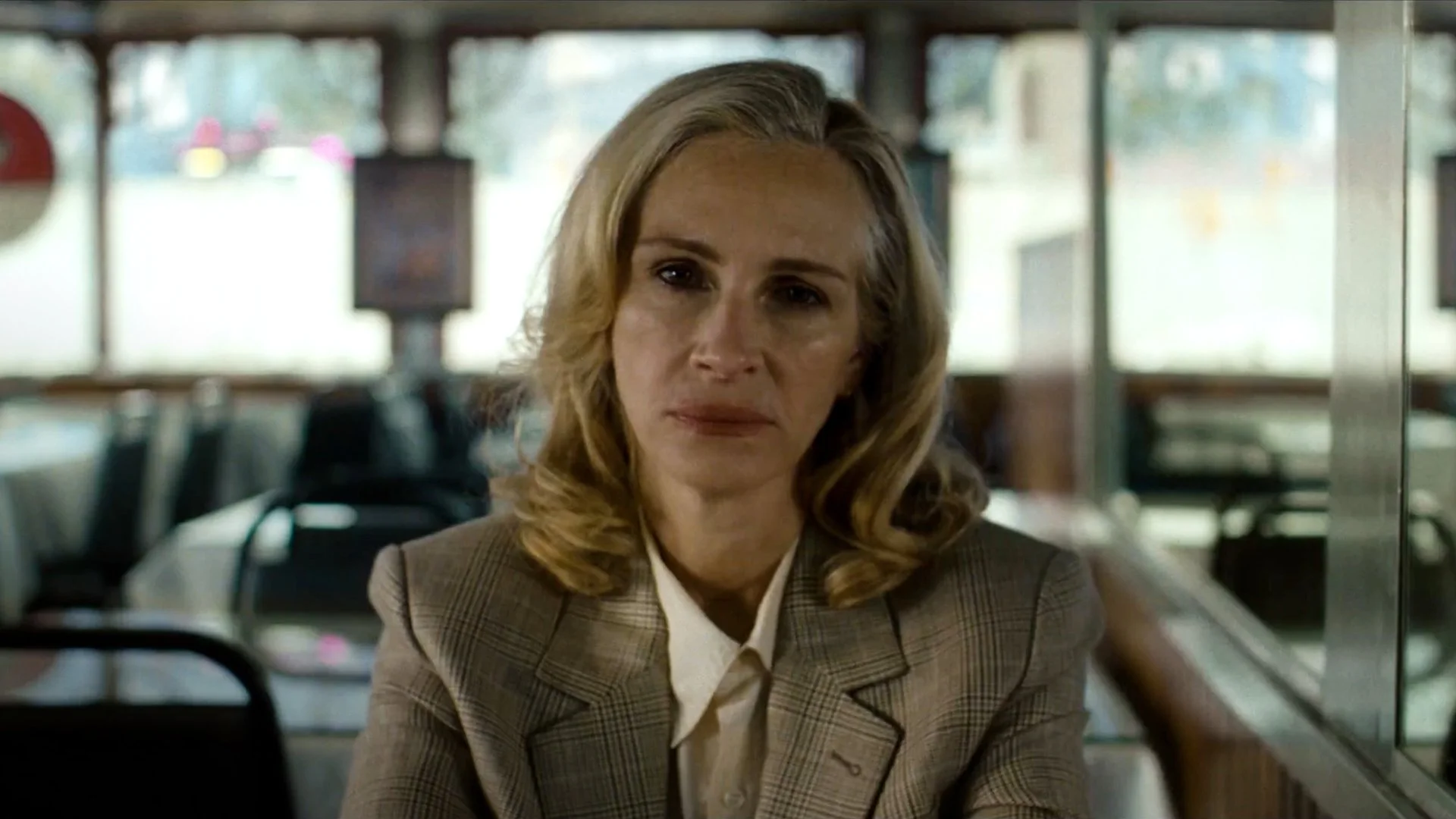
I watched the movie many years ago, as a teenager — or started to. I turned it off because I was appalled by how, as I said then, “boring” it was. Years later, with a devoted love of Lerner’s and Loewe’s music and lyrics in place, as well as an abiding regard for director George Cukor, I must say that I agree with my adolescent assessment: it takes a special kind of creative indifference to be presented with songs like “Ordinary Man” and “The Street Where You Live” and to respond by cementing your camera to the ground.
Sure, Cukor is dutiful with the dialogue scenes, but he allows Audrey Hepburn to overact. Her dubbing is a true embarrassment; the few instances where her singing voice remains on the soundtrack are endearing, warbly and sweet. If they let Rex Harrison do it, they should’ve let their woman lead sound imperfect, too.
And that’s my rub with this show: Alan Jay Lerner’s adjustments to Bernard Shaw work to destroy Pygmalion’s proto-feminist underpinnings and reimagine it as a misogynist apologia. Efforts have been made to counteract these changes — e.g. the Lincoln Center revival with Lauren Ambrose, directed by Bartlett Sher, which has Eliza leaving Higgins in the end. (I saw this production and was unmoved.) But you still have garbage like the Princess of Transylvania lifting a silent and ornamental Miss Doolittle by the chin and muttering, “Charming.”
Nothing that I’ve seen compares to what I hear. The 1956 album has Julie Andrews, of course, and Mr. Harrison giving their all; its orchestrations are swift and energetic. I first started listening to the recording — made just one week after the musical’s Broadway premiere — during the pandemic, and it has remained one of my favorite albums ever since.
I think My Fair Lady is the perfect musical if one is speaking purely in terms of music and lyrics. Its songs are cinema all by themselves.
The eyes of Jafar Panahi: a cinematic “accident”
Last night, the Academy Awards were presented at the Dolby Theater in Hollywood. On the red carpet beforehand, multimillionaire businessman and television personality Kevin O’Leary posed for photographers while wearing a silver-trimmed kimono and diamond-encrusted glass frame that appeared to be displaying NBA player trading cards. He was at the ceremony because of his role in Josh Safdie’s Marty Supreme — a drama about ping-pong competitions in 1950s New York City. Though a regular on reality TV programs, this was Mr. O’Leary’s first appearance in film; he has since posited that he would like to return to the big screen, perhaps as a Bond villain.
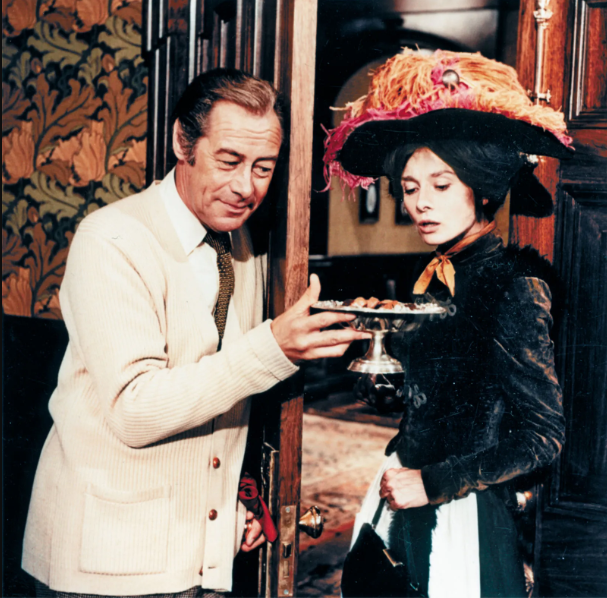
As Mr. O’Leary brandished his jewelry, he was watched from a little further down the carpet by lauded neorealist Iranian filmmaker Jafar Panahi, who was nominated for writing and directing the absurdist political thriller It Was Just an Accident. Mr. Panahi is one of the greatest filmmakers of our time; his movies tackle sociopolitical realities of contemporary Iran with sanity, humor and pathos. His films are frequently produced in secret, so as to avoid censorship or suppression from his nation’s government.
It was a marked contrast, glimpsing Mr. O’Leary in his prepubescent mania for attention, flashing teeth and trinkets to a wall of lenses, beside Mr. Panahi’s steady, baffled composure. The great artist looked upon the great personality as a sort of aberration — as a grotesque, as a vaguely incomprehensible spectacle. It was the look one gives a derelict charging down the sidewalk shouting profanities into the air. Amused, yet repulsed.
His view of Mr. O’Leary — both literal and subjective — constitutes perhaps the most cinematic moment of the last year. An evening designed to celebrate the best in visual-narrative storytelling yielded a more poignant, multilayered graphic of global society in this random pairing of its own guests than did any of the feature-length or short films it chose to honor.
Of course, the reason for this is that Mr. Panahi is a great observer: he looks at the world, he looks at people, and his look is conveyed to us via his films or his face. He understands what he sees, and relates his understanding to us in terms that provoke as much as they make sense.
He is striking on that red carpet. He is still in a scene that is rampant with chaos. His view of Mr. O’Leary, his look at him, tells us more about the future of cinema that either Marty Supreme or It Was Just an Accident. Those films are merely figments of the people who made them; we learn more by placing their people, or their makers, next to one another, and by inviting ourselves to ask whose view, or whose look we’d rather see.
Sunset Blvd
Old movies have always been around. That’s what’s so handy about them.
When I first saw Sunset Blvd, as a teenager, I thought it was so-so. Then, when I was twenty, I watched it again: I was on a plane back home from Italy — I’d just seen Rome, Florence, Pompeii. It was a long return flight, so I cued up a triple screening: Sunset Blvd, Annie Hall, and Adaptation.
Movies about writers. Movies about obsession.
Something about the (literally) elevated, worldly mindset in which I sat at that moment gave me a greater affection for this film in particular. It also granted me a keener eye. After all, I was a devotee of co-writer and director Billy Wilder’s other flicks: Some Like It Hot had been formative; The Apartment, comfortable; and Sabrina communicated the romantic yearning of my adolescence better than any other movie.
So I decided to give Sunset Blvd the benefit of the doubt. I now thought of it as a shrewd if somewhat hokey venture into showbiz cynicism. I’d learned by then — and I think this way still — to be wary of Mr. Wilder’s brand of jadedness. He had a way of being too clever by half while completely missing the deeper implications of the subjects he skewered.
It’s like he took much fun in wriggling in the poker, such that he never noticed the meat he was impaling hadn’t stopped pulsing.
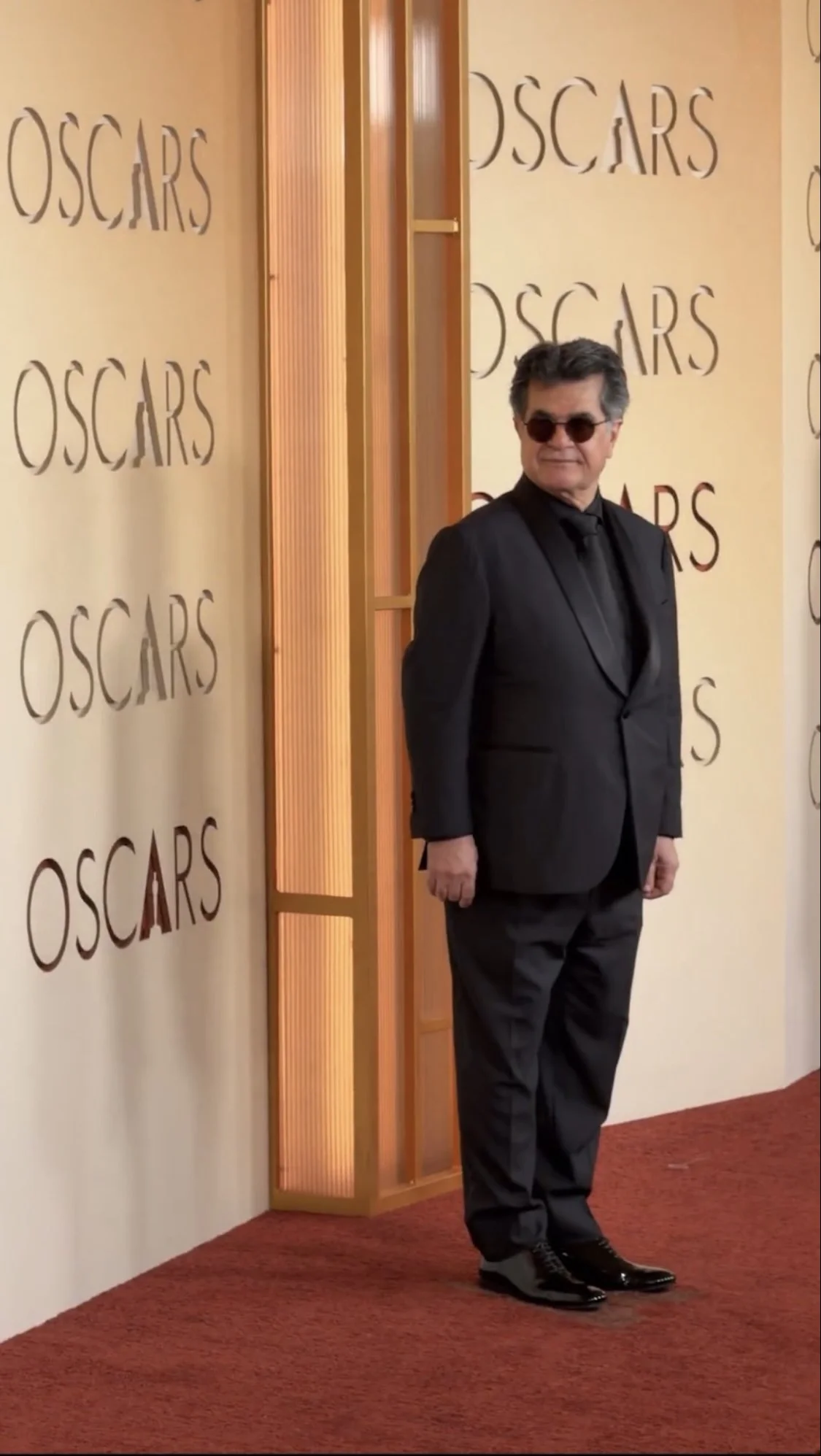
In the years since, I’ve rewatched Sunset Blvd from time to time, and, this past December, I went to see Todd Haynes’ Carol at the Community Theater in Catskill and thus saw a fragment of Norma Desmond’s (Gloria Swanson) New Year’s Eve party, which, at one point, Rooney Mara and John Magaro find themselves spectating from a projection booth.
How tickled was I to realize, today, that I was sitting down to watch Norma and company again at the very same theater. (At this rate I’m going to have to see Queen Kelly in Catskill, too.)
At this screening, I cried. I didn’t expect that. Norma got me; she’s continued to get me more and more as the years have gone by. That fluttering voice — round and sumptuous, yes, but also warbling. Frightened. Her broadness, the comedic camp of Gloria Swanson’s gestures are rooted in painful self-destruction. Norma Desmond clings to fantasy because it what she’s always used to survive — except that, now, it’s got the better of her.
She’s so pathetic, so earnest. And I so get it.
Last night, I was having a conversation with a new-ish friend whom I happen to know has, as one says, “feelings” for me. At first I knew this intuitively; then — earlier this week, after he sent me a long, confessional text message — I knew it literally.
We were talking a lot about yearning and desire. About wanting to be wanted. He kept gazing into my eyes — keeping a straight face, smiling. But I knew how he felt. He’d told me. And we both knew that I wasn’t going to give him what he wanted.
That was less than twenty-four hours ago. The more I’ve thought about our conversation, which was charming enough on the surface — kind, transparent, encouraging even — the more I’ve thought about it, the more I’ve been troubled by a sense that, on some level, I was being placed in a compromising position.
It felt as though I was being made to answer for myself. As if he’d been silently demanding: “Explain to me why you don’t love me.”
How jarring, then, to watch Ms. Desmond — upon being rejected by her washed-up screenwriter of a houseboy, Joe (William Holden) — cry out: “What you’re trying to say is you don’t want me to love you!”
And I suddenly saw all the years that I’d wanted people to want me. I saw all the fantasy that I had once used to sustain myself — and how, in adulthood, that fantasy led me to neglect everything that was right in front of me. I, like Norma, had let the weeds grow. I, too, had stashed my car in the garage, mounted it on cinderblocks, and allowed rats to run rampant across the tiled floor of my drained swimming pool.
Sometime between that twenty-year-old’s journey from Italy and my present residence in the Hudson Valley, I’d learned to keep house. It’s not the Ritz, to be sure, but it’s home. I think I know now how to be honest with myself.
Here’s the truth: I had to learn this. I’ve had to earn my keep. That’s something that Holden’s Joe avoids doing, it’s something that Ms. Desmond enables until she decides she’d rather see her boytoy dead. He has a chance, of course, to go “straight” — first, when his agent encourages him to give up his car (“Best thing that could ever happen to you!”) and second, when he has the option to leave the “queer” world of Norma’s decaying palace and pair up with Betty, his twenty-two-year-old writer partner (the marvelous Nancy Olson). But he hates himself, or decides to hate himself, or prefers to be cynically detached. He chases Betty away so that Norma can shoot him in the back.
I understand the Joes of this world, I do; I sympathize with the Normas; and I think Mr. Wilder did, too.