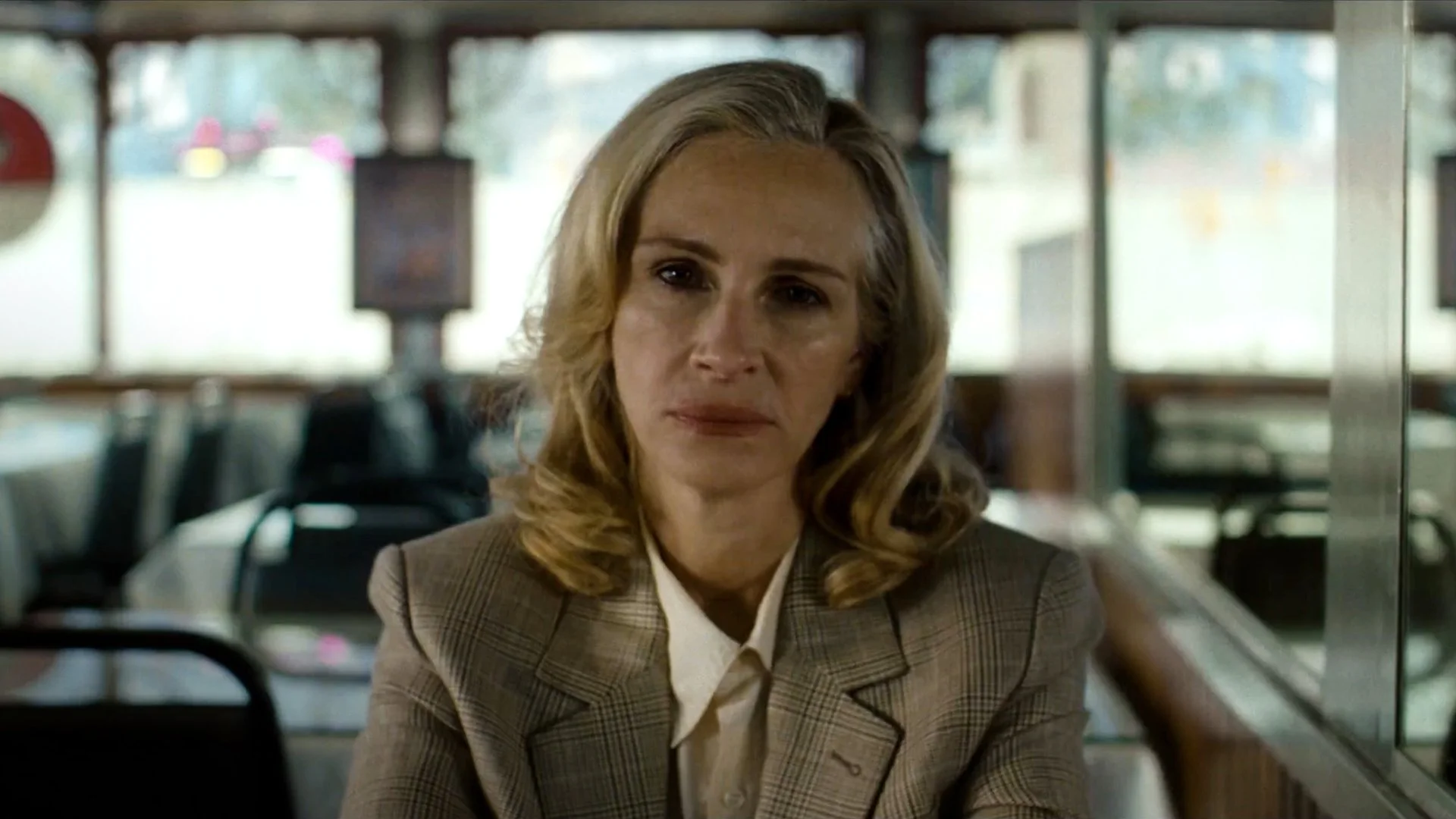
After the Hunt
Luca Guadagnino’s most recent film, After the Hunt, was maligned and nitpicked when it was released last year. I think it’s great: a juicy drama about glamorous academics reckoning with matters of race, gender, and abuse while dancing around the billionaire class.
Of course, this ripe configuration orients itself primarily to the point of view of one white woman. Julia Roberts’ Alma is a great tragic character — emblematic of the silent, solitary valuation that is demanded of any person, but particularly any woman, who’s been granted access to the boys’ club. Guadagnino and screenwriter Nora Garrett are pretty firmly in her corner — which I don’t mind, though it is striking that Ayo Edebiri’s Maggie is consigned to ancillary behavior in the narrative.
She mostly discovers information, manipulates events, and serves as a potential wolf in sheep’s clothing. An Eve Harrington to Alma’s Margot Channing. One gets the impression that Maggie’s POV was worked in, formally, to disrupt an otherwise solely white worldview, to eschew Alma’s perspective in the eyes of the audience. But is that an enlightened choice, or merely a self-conscious one?
After the Hunt is aware that there’s a unique or willful cruelty in regarding a Black woman’s claims of sexual assault as disingenuous. Its plot hinges on that awareness. Yet I’m not sure that the conclusions it draws, or the resolutions it presents, are organic. Those feel forced, mitigated.
Which is a shame, because Roberts’ character is more than enough reason to see this movie. I felt very at home with Alma; as Nick Caraway says, “I’m inclined to reserve all judgments… and so it came about that in college I was unjustly accused of being a politician” — a revelation that has always struck a nerve with me and which, I daresay, may be applied to this pill-popping, intensely private professor of philosophy.
She is a politician, because she must survive. She is not vulnerable to anyone; no one knows of her pain.
And I get it. Why dignify people’s selfishness with your own inner truths? No sooner is your story out of your mouth than the listener is distorting it to suit their own ends. Alma keeps to herself — and, ultimately, destroys her gut — to avoid being taken advantage of.
There is no doubt that this movie is imperfect. Guadagnino and Garrett sabotage their own efforts, forgetting what people actually say and do for the sake of making their story provocative or “complicated;” this is as apparent in Maggie — who I feel is, as a character, more a construction of plot than she is a believable, breathing person — as it is in something like having Andrew Garfield’s five heaping plates of food arrive at his table at the Indian restaurant a mere minute after he ordered them.
Yet I feel that movies ought to be allowed to be imperfect. After the Hunt is a fun, messy confrontation of hot-button topics that comes off as being more paranoid, more reactive than is necessary. “No one is coming for you,” I want to say to these filmmakers. “It’s just a good idea to have boundaries, and to face yourself.”
But, of course, people do hide from themselves. That’s why we have tragedy. And that’s why we have this movie.